
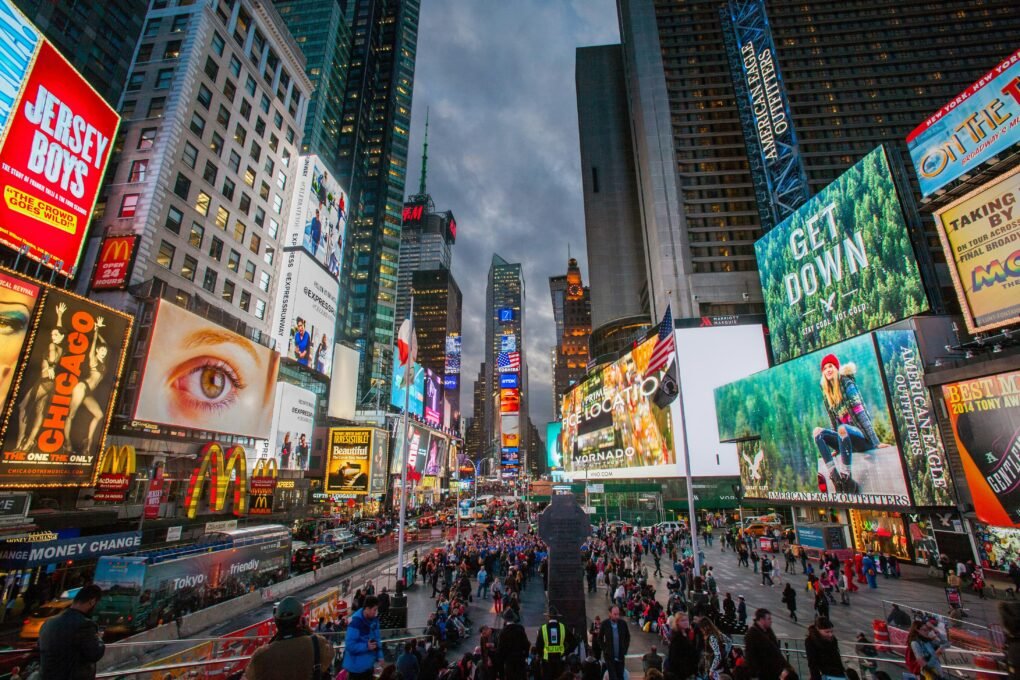
Dawn arrives slowly over the Hudson River, painting the horizon in shades of gold and blue. As daylight slips between towering skyscrapers, glass facades become giant mirrors reflecting a city on the verge of awakening. The distant sound of sirens echoes through avenues still wrapped in morning calm, while a gentle breeze moves through urban corridors carrying the energy of a new day.
Few cities create such a powerful first impression. In New York, every street feels like part of a story carefully written over centuries of ambition, reinvention, and cultural exchange. From the elegant historic buildings of Manhattan to the creative neighborhoods of Brooklyn, the city reveals a personality that constantly evolves without ever losing its essence.
As the morning progresses, the pace quickens. People from every corner of the world cross sidewalks in a spontaneous choreography, while sunlight dances between iconic towers that have shaped the global imagination. No matter how many times New York has appeared in films, books, or photographs, being here reveals a city entirely different from the one imagined.
Why New York Captivates Travelers from Around the World
New York occupies a unique place in the global imagination. More than a travel destination, it represents the idea of endless possibilities. For centuries, millions of people have arrived here seeking new opportunities, bringing traditions, languages, and stories that helped create one of the most diverse societies on Earth.
This diversity can be felt everywhere. It appears in the architecture that blends different eras, in the art that fills the streets, in the languages heard during a simple walk, and in the city’s remarkable ability to reinvent itself time and time again.
At the same time, New York preserves landmarks that transcend borders. The skyline of Manhattan, the grandeur of the Statue of Liberty, the beauty of Central Park, and the bright marquees of Broadway have become symbols recognized across the globe.
Climate and the Best Time to Visit New York
Each season offers a completely different perspective on the city.
Spring awakens parks and gardens with colorful blooms, creating an inviting atmosphere for outdoor exploration. Temperatures typically range from 50°F to 72°F (10°C to 22°C), making it one of the most pleasant times to visit.
Summer brings a vibrant energy. Long daylight hours, outdoor events, and lively public spaces define the season. Temperatures can exceed 86°F (30°C), but the city feels especially alive during these months.
Autumn is often considered New York’s most beautiful season. Trees turn shades of gold, orange, and crimson, transforming places like Central Park and Prospect Park into breathtaking landscapes.
Winter reveals a classic side of New York. Holiday decorations, ice-skating rinks, and the possibility of snowfall create a magical atmosphere that has inspired countless films and holiday traditions.
Discovering the Soul of New York: Landmarks, Landscapes, and Living Culture
Manhattan: The Heart of the City
Manhattan is where New York’s energy feels most intense. Legendary skyscrapers stand alongside historic buildings, while famous avenues connect some of the world’s most recognizable locations. Walking through Manhattan feels like stepping into a living narrative shaped over generations.
Brooklyn: Creativity and Authenticity
Across the East River, Brooklyn offers a different perspective. Tree-lined streets, independent galleries, and local cafés reveal a more intimate side of New York. Crossing the Brooklyn Bridge provides one of the city’s most memorable views.
The Statue of Liberty and Ellis Island
Few landmarks carry as much symbolic meaning as the Statue of Liberty. Seeing it up close offers insight into New York’s historic role as a gateway for millions of immigrants seeking a new beginning.
Central Park: An Urban Escape
Amid the city’s density, Central Park provides a surprising sense of tranquility. Winding paths, peaceful lakes, and expansive green spaces create a world that feels far removed from the surrounding avenues.
Flavors of New York: Gastronomy, Traditions, and Local Experiences
New York’s culinary scene reflects its cultural diversity. Every neighborhood tells a story through food, shaped by generations of immigrants who brought flavors and traditions from around the world.
Places like Chelsea Market serve as vibrant meeting points of cultures, where aromas, ingredients, and culinary techniques blend into a uniquely New York experience. Dining in the city is about more than a meal—it is an opportunity to understand the people and histories that have shaped one of the world’s great urban centers.
Where to Stay in New York
Midtown Manhattan
Ideal for travelers who want easy access to major attractions. The area offers excellent transportation connections and accommodations ranging from comfortable hotels to luxury properties.
Upper West Side
A quieter, more residential neighborhood that combines proximity to Central Park with a sophisticated and welcoming atmosphere.
SoHo
Known for its galleries, boutiques, and historic architecture, SoHo is perfect for travelers interested in art, fashion, and contemporary urban culture.
Brooklyn Heights
An excellent choice for visitors seeking a more local experience, complete with charming streets and spectacular views of the Manhattan skyline.
Arriving and Exploring New York
The journey begins even before reaching the city center. Most visitors arrive through John F. Kennedy International Airport (JFK), LaGuardia Airport, or Newark Liberty International Airport.
As the skyline gradually appears during the journey toward Manhattan, anticipation builds. Bridges, tunnels, and towering skyscrapers emerge on the horizon, creating one of those rare moments when reality matches years of imagination.
Once in the city, exploration becomes part of the adventure. While the subway efficiently connects nearly every neighborhood, some of the most memorable discoveries happen on foot. Hidden plazas, independent bookstores, historic facades, and unexpected viewpoints often appear when least expected.
Essential Information for Planning Your Trip
The local currency is the U.S. Dollar (USD), and electronic payments are widely accepted throughout the city. For first-time visitors, five to seven days typically provide enough time to experience both iconic attractions and lesser-known neighborhoods.
Travel costs can vary considerably depending on the season and accommodation choices. In general, New York is considered a medium-to-high-budget destination, particularly in central areas of Manhattan.
Connectivity is excellent, with reliable internet access available in hotels, cafés, restaurants, and many public spaces. Packing should reflect the season, as summers can be hot and humid while winters often require heavy coats and cold-weather gear.
The Memory That Remains
When the journey ends, New York lingers in unexpected ways. It reappears in a photograph discovered months later, in a familiar melody, or in the memory of a street explored without a destination in mind. Few places leave such a lasting impression. Perhaps because New York is never simply a city that you visit—it becomes a collection of moments that continue to travel with you long after the skyline fades from view.
FAQ: Frequently Asked Questions
What is the best time to visit New York?
Spring and autumn are generally considered the best seasons thanks to pleasant weather and beautiful scenery.
How many days do I need in New York?
Five to seven days are ideal for a first visit.
Do I need a car in New York?
No. The city’s public transportation network makes it easy to get around without one.
Is New York suitable for family travel?
Yes. Parks, museums, cultural attractions, and family-friendly activities are available throughout the city.
Is Brooklyn worth visiting?
Absolutely. Brooklyn offers a creative, authentic perspective that complements the classic Manhattan experience.