The morning mist rises from the glassy, stillness of Lake Lucerne, peeling back like a silk curtain to reveal the jagged, snow-dusted amphitheater of the Alps. The air here does not just feel cold; it tastes pure, carrying the faint, crisp scent of pine needles, damp earth, and distant glaciers. In the background, the soft, rhythmic clank of cowbells echoes across alpine pastures, blending into the gentle hum of a yellow postal bus winding its way up a mountain pass.
A golden light breaks over the crest of the Jungfrau, catching the vapor trails of a red cogwheel train as it climbs toward the clouds. The world feels sharp, defined by granite, ice, and deep, emerald valleys where timber chalets sit as they have for centuries. It is a landscape that demands your full attention, shifting effortlessly from the dramatic scale of a mountain precipice to the quiet intimacy of a lakeside promenade.
Walking through this terrain, the passage of time seems to alter. The frantic rush of modern life dissolves against the permanent, humbling presence of the mountains. Every horizon looks like an oil painting, every breath feels restorative, and the quiet precision of the country reveals itself not as a rigid rule, but as an art form designed to let you experience nature at its most majestic.
Why Switzerland Captivates Travelers Worldwide
To cross into Switzerland is to step into a living tapestry woven from centuries of European history, yet distinctly insulated from its chaos. Nestled in the mountainous heart of the continent, this alpine nation has carved out an identity rooted in deep self-reliance, cultural synthesis, and an almost sacred reverence for the natural world. It is a place where three of Europe’s greatest cultures—Germanic, French, and Italian—meet, not to collide, but to melt into a harmonious whole that retains the best of each.
The history of the country is etched into its very topography. For generations, isolated valley communities developed their own unique traditions, dialects, and architecture, protected by the formidable walls of the Alps. This isolation fostered a fierce independence and a culture of craftsmanship, where patience and precision became survival traits. Over time, these fractured valleys united into a confederation that turned neutrality into a position of strength and global trust.
Today, this heritage is felt in the seamless transition from the orderly, medieval lanes of Zurich to the sun-drenched, palm-lined piazzas of Ticino, where Italian passion meets Swiss efficiency. The country’s identity is not tied to a single language or monument, but to an overarching philosophy: a collective belief that the landscape must be preserved, that quality trumps speed, and that true luxury lies in quiet, unhurried contemplation.
Climate and the Best Time to Visit Switzerland
The turning of the seasons in the Swiss Alps is a slow, dramatic transformation, with each period offering an entirely different version of the landscape. The country does not have a single ideal moment to visit; rather, it possesses distinct chapters, each tailored to different desires and sensory experiences.
Winter arrives with a quiet intensity, blanketing the valleys in thick powder and transforming the mountains into the world’s premier winter amphitheater. From December through March, the air is crisp, the skies are often a brilliant, biting blue, and the villages glow with the warm light of wood-burning hearths. This is the season of frozen lakes, alpine skiing, and the comforting indulgence of hearty mountain food after a day out in the snow.
As the ice melts, spring and summer breathe vibrant life back into the lowlands. From June to September, the meadows burst into a kaleidoscope of wildflowers, and the alpine passes open to hikers. Summer temperatures are pleasantly warm, hovering around 25°C in the valleys, making the pristine lakes irresistible for afternoon swims. Autumn, particularly October, brings a golden serenity, as the larch forests turn amber, the crowds thin, and the harvest festivals bring a rustic celebration to the vineyards and valleys.
Discovering the Soul of Switzerland: Monuments, Landscapes, and Living Culture
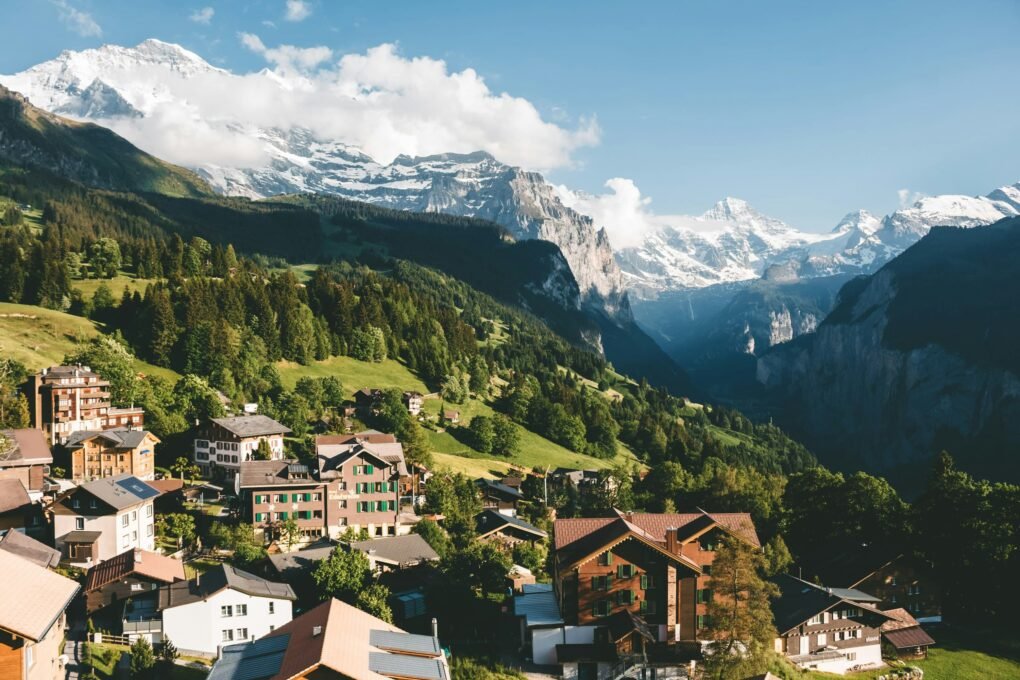
To truly understand the country, one must wander through its diverse regions, where geographic grandeur meets architectural grace. In the heart of the Bernese Oberland, the valley of Lauterbrunnen serves as a dramatic introduction to the raw power of Swiss nature. Here, seventy-two waterfalls plunge down vertical limestone cliffs into a valley carpeted in deep green, while the icy peaks of the Eiger and Monch loom overhead, casting long shadows that change by the hour.
Journeying further south into the Valais region, the pyramid-shaped silhouette of the Matterhorn dominates the sky above the car-free enclave of Zermatt. This mountain is more than a geographic feature; it is a symbol of human ambition and alpine mystique. The surrounding old village, with its dark, sun-blackened larch-wood granaries resting on flat stones to keep out mice, offers a glimpse into the rugged, agrarian past that existed long before luxury boutiques lined the streets.
Shifting toward the French-speaking west, the atmosphere softens along the shores of Lake Geneva. Here, the medieval walls of Chillon Castle sit directly on the water’s edge, looking out toward the snow-capped Savoy Alps. Nearby, the dramatic terraced vineyards of Lavaux plunge steeply into the lake, a UNESCO World Heritage site where the sun reflects off the water to ripen the Chasselas grapes, showcasing a centuries-old tradition of heroic viticulture that blends seamlessly into the sophisticated rhythm of the Swiss Riviera.
Flavors of Switzerland: Gastronomy, Traditions, and Local Experiences
Swiss gastronomy is an honest reflection of its terrain—substantial, comforting, and deeply tied to the rhythms of pastoral life. For centuries, the diet of the alpine valleys depended on what could be preserved through long, isolating winters, giving rise to an extraordinary tradition of cheese-making. In the pre-Alpine hills, the aroma of simmering milk and woodsmoke leads to traditional chalets where master cheesemakers transform alpine milk into rich, nutty wheels, a process best appreciated while wandering through the historic lanes of Gruyères.
At the communal table, this culinary heritage comes alive through dishes meant for sharing. The melting of cheese is treated with ceremonial respect, whether through a classic fondue bubbling in a ceramic pot over an open flame, or the scraped, caramelized layers of raclette served over boiled potatoes and pickled onions. These meals are expressions of warmth and togetherness, designed to be enjoyed slowly alongside a crisp glass of local Fendant wine.
Beyond the mountains, the country’s sweet legacy unfolds in artisanal chocolate shops from Zurich to Geneva. The chocolate here is legendary, defined by the invention of milk chocolate and the refining process of conching, which creates a velvety texture that melts effortlessly on the tongue. Visiting a traditional confectionery allows you to witness chocolatiers working by hand, tempering rich cacao and infusing it with mountain cream, local honey, and roasted nuts, turning a simple indulgence into a high art.
Where to Stay in Switzerland
Zurich Old Town & Lakefront
For those seeking an elegant blend of urban sophistication and historic charm, the area around the Limmat river and the historic center is unmatched. Staying here places you amidst medieval guilds, refined cafes, and cobblestone alleys, with the lakeside promenades just a short stroll away. This area caters perfectly to culture enthusiasts and luxury travelers, with boutique properties overlooking the water commanding premium rates.
The Jungfrau Region
To experience the quintessential alpine dream, the mountain villages of Grindelwald and Wengen offer front-row seats to the high peaks. Wengen, a car-free village perched on a sunny terrace, offers profound quiet and classic timber hotels, making it ideal for hikers and families. Grindelwald provides a more dramatic, glacier-framed setting with a wider variety of upscale chalets, with mid-range to luxury pricing reflecting the spectacular views.
Ticino and the Southern Lakes
For a completely different, sun-kissed perspective, the region around Lugano and Ascona offers a delightful Mediterranean flair. Here, palm trees frame deep blue alpine lakes, and the architecture features warm pastel hues. Ideal for relaxation, romance, and slow dining, this region combines Italian lifestyle with Swiss precision, offering everything from grand lakeside palaces to intimate, rustic guesthouses.
Arriving and Exploring Switzerland
The journey into Switzerland begins the moment your aircraft descends through the clouds, revealing the shimmering expanse of Lake Zurich or the dramatic alpine backdrop of Zurich Airport or Geneva Airport. Stepping off the plane, the transition to the rails is immediate and effortless. There is no jarring dislocation; instead, you are swept into a synchronized system of movement where the train travel is not merely a logistical necessity, but one of the defining pleasures of the voyage.
Gliding through the countryside aboard the grand panoramic trains, the windows act as living canvases. The world moves past in a cinematic blur of emerald hills, rushing rivers, and impossibly steep gorges crossed by elegant stone viaducts. As the train climbs higher, the tracks grip the mountain slopes, offering views of hidden valleys and isolated chapels that are unreachable by car. The gentle click-clack of the rails becomes the soundtrack to your exploration.
On the water, historic paddle steamers churn through the deep lakes, their white wakes cutting through reflections of medieval castles and sheer rock faces. To travel here is to embrace the joy of the journey itself—switching from a mainline train to a mountain cogwheel, and finally to a cable car that lifts you silently into the thin, crisp air of the high peaks, leaving you to finish the day with a quiet walk down a path worn smooth by generations of travelers.
Essential Information for Planning Your Trip
Planning a journey into this alpine sanctuary requires an appreciation for its unique economic and logistical landscape. The currency of the realm is the Swiss Franc, a symbol of the nation’s enduring stability. Transactions throughout the country are highly digital, and while major credit cards are universally accepted even in remote mountain huts, carrying a small amount of cash is a pleasant nod to local tradition when purchasing fresh cheese from an honor-system farm fridge along a hiking trail.
A week to ten days represents an ideal duration to capture the distinct cultural and geographic shifts of the country, allowing for a balanced immersion into both the vibrant cities and the high alpine valleys. When packing, the golden rule is versatility; the weather can shift dramatically from a balmy afternoon by the lakes to a freezing breeze on a mountain summit, necessitating high-quality layers, a windproof jacket, and sturdy footwear with deep tread for navigating cobblestones and mountain paths alike.
To travel with complete freedom, embracing the local digital infrastructure is key. Staying connected is seamless with widespread access to high-speed networks, allowing you to easily track train connections and mountain weather conditions in real time. The true luxury of traveling here is the ease with which everything operates, allowing you to focus entirely on the sensory beauty of the landscapes rather than the mechanics of travel.
The Memory That Remains
Long after the train has returned to the airport and the luggage is unpacked, it is the silence of the high Alps that stays with you. You will remember the specific quality of the afternoon light as it turned the granite peaks a soft, dusty pink, and the chill of the mountain air that made the evening fondue taste so unforgettable. Switzerland imprints itself on the mind not as a collection of sights, but as a feeling of ultimate clarity and peace. It is the realization that somewhere amidst the clouds, there is a world operating in perfect, beautiful harmony, waiting quietly for your return.
FAQ: Frequently Asked Questions
What is the best way to travel around the country?
The most efficient and immersive way to explore is by utilizing the comprehensive national rail and bus network. It connects airports, major cities, and even the most remote mountain villages with absolute punctuality, making a car entirely unnecessary for a classic itinerary.
Is English widely spoken in Switzerland?
Yes, English is spoken fluently by a large majority of locals, particularly in hotels, restaurants, transport hubs, and major tourist areas, making communication effortless despite the country having four official national languages.
How expensive is a typical meal when dining out?
Dining is a premium experience, with a casual lunch in a café or mountain stubli averaging around thirty to forty Swiss Francs per person, while a multi-course dinner in a traditional restaurant typically starts from sixty Swiss Francs upward, excluding wine.
Can you drink the tap water in Swiss cities and villages?
The tap water is of exceptional quality and is entirely safe to drink everywhere. Across the country, you will find thousands of historic fountains flowing continuously with fresh, cold mountain spring water that is perfect for refilling your bottle.
Are the mountain peaks accessible for non-hikers?
Absolutely. An extensive network of cable cars, funiculars, and cogwheel trains is designed to bring visitors of all mobility levels safely and comfortably to the highest viewing platforms and panoramic restaurants in the Alps.