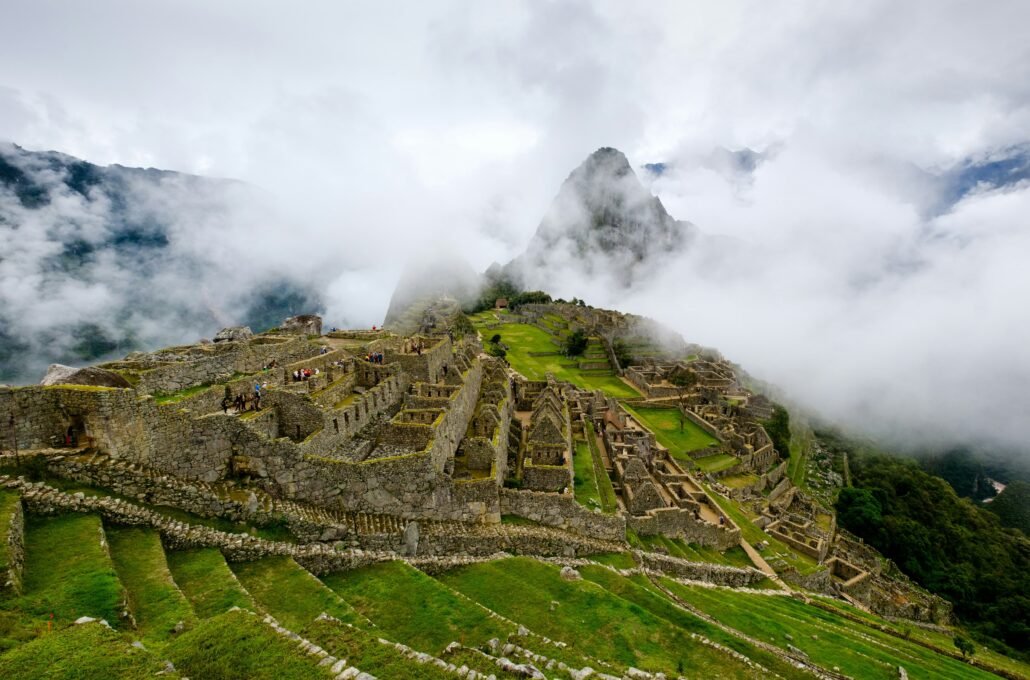
The silence in the Andean dawn has an almost palpable density. Even before the first rays of sun conquer the sharp ridges of the mountain range, the cold, thin air carries the distant, continuous sound of the Urubamba River, which snakes hundreds of meters below. The thick mist, which rests over the valleys during the night, begins to move slowly, like a theater curtain opening to the morning spectacle. There is a lingering scent of wet earth and muña leaves that mixes with the freezing breeze, awakening the senses of those waiting for the day to break.
As the darkness yields to a deep blue hue, the dramatic contours of Huayna Picchu begin to sketch themselves against the sky. The morning light does not emerge suddenly; it filters slowly through the mountain crevices, first touching the snowy peaks in the distance before bathing the large, perfectly fitted granite structures. It is a moment of transition choreographed by nature itself, where time seems to slow down so that every visitor can absorb the magnitude of Andean isolation.
When the sun finally breaks through the rock barriers, the fog dissipates into golden threads, revealing the vibrant green terraces that plunge toward the abyss. The soft warmth begins to contrast with the chill of the early morning, and the lush vegetation of the high jungle comes alive, framing the squares and temples of a city that defies gravity. Watching Machu Picchu emerge from this embrace of clouds is to understand, without the need for words, why this fragment of stone and dream remains the pinnacle of travel imagination worldwide.
Why Machu Picchu Captivates Travelers Globally
The fascination exerted by this stone sanctuary goes far beyond its impressive architecture or its dramatic location between the Andes and the Amazon. Machu Picchu represents the zenith of knowledge of a civilization that learned to read the stars, tame the mountainous terrain, and engage in a sacred dialogue with the geography around it. Built under the command of Emperor Pachacútec in the 15th century, the city was not a mere urban center, but rather a royal retreat and a space of profound spiritual connection, where each block of rock was positioned to honor the divinities of the earth and the sky.
The identity of this place is intimately linked to the mystery that surrounded it for centuries. Unlike other urban centers in the Cusco region, the complex was never found by the Spanish conquerors, allowing its structure to remain intact and preserving the secrets of its ritual and agricultural functions. When the Western world rediscovered its ruins in the early 20th century, it encountered a masterpiece of engineering that seemed to have grown organically from the mountain itself—a perfect symbiosis between human ambition and respect for the forces of nature.
Today, walking along these ancient paths awakens a sense of reverence that transcends conventional tourism. The vibrant atmosphere and the energy emanating from the polished stones create an immediate connection to the past. The enchantment lies in the sanctuary’s ability to make every visitor feel part of a timeless narrative, a living archaeological mystery that continues to challenge definitive explanations and inspire a deep respect for Andean ancestry.
Climate and the Best Time to Visit Machu Picchu
The rhythm of life in the sacred citadel is dictated by two very well-defined seasons, characteristic of the region’s subtropical alpine climate. Understanding this alternation between the dry weather and the rainy period is fundamental to shaping your desired experience, as the landscape and the atmosphere of the site transform completely throughout the year, influencing everything from the visibility of the ruins to the difficulty of the hikes.
The period from May to September marks the dry season in the Andes, widely considered the ideal time for exploration. Under mostly blue skies and sunny days, the granite monuments contrast sharply with the green of the mountains, providing perfect conditions for photography and for traversing the trails without the unpredictability of mud. Mornings and nights tend to be considerably cold, with temperatures approaching freezing, but the midday warmth compensates, making the walks pleasant. This season also attracts the highest flow of travelers, which demands rigorous advance planning to secure entry permits.
In contrast, the months from November to March bring seasonal rains, turning the scenery into a mystical and lush spectacle. Although the precipitation can momentarily shroud certain vistas in dense mist, it also carpets the sanctuary in intense shades of green and significantly reduces visitor crowds. The transitional months, such as April and October, offer an interesting balance, with alternating days of sunshine and light rain, allowing travelers to appreciate nature’s transition with greater tranquility.
Discovering the Soul of Machu Picchu: Monuments, Landscapes, and Living Culture
The exploration of the sanctuary reveals a meticulously planned urban division, where space was fragmented between daily life and communion with the sacred. The architecture here dialogues directly with the topography, creating sectors that reflect the social and spiritual hierarchy of the empire.
The Sacred Sector and Celestial Temples
At the highest point of the citadel rest the structures that connected priests to the Andean deities. The Templo del Sol stands out immediately for its semicircular walls of perfectly polished granite, erected over a natural rock formation that harbors a mysterious cave, frequently associated with royal rituals. Nearby, the Templo de las Tres Ventanas opens onto the main square, framing the mountainous landscape through trapezoidal openings that symbolize the three worlds of Inca cosmology. Just above, the solar clock known as the Intihuatana rises like a mystical sculpture, an anchoring point where ancient astronomers made precise measurements to determine solstices and ensure bountiful harvests.
The Urban Sector and Palatial Life
Walking toward the residential areas, the buildings assume a more functional, yet no less impressive, character. Royal palaces and elite residences display double-framed doorways that signaled the importance of their occupants. In this sector, the Templo del Cóndor surprises with the brilliance of its execution: the architects took advantage of natural rock formations to sculpt the monumental wings of one of the most sacred birds of the Andes, while on the ground, the head and neck of the animal complete the three-dimensional representation used for ritual offerings.
The Embrace of Agricultural Terraces
Contouring the entire complex, the immense stone-faced agricultural terraces did not serve merely for growing crops like corn and potatoes; they played a crucial role in stabilizing the mountain. This monumental engineering prevented erosion and landslides, allowing the city to withstand centuries of seismic activity and torrential torrential rains. Strolling along these green steps offers one of the widest perspectives on the harmony between human design and the rugged terrain.
Tastes of Machu Picchu: Gastronomy, Traditions, and Local Experiences
The dining table in the Cusco region is a direct reflection of Andean biodiversity and the cultural heritage that has outlasted time. Local cuisine is not just a meal, but a celebration of the ingredients that sustained entire civilizations, presented today with a sophistication that draws global attention. It is a gastronomy grounded in altitude, the soil, and ancestral preservation and cooking techniques.
The valleys surrounding the sanctuary are rich in varieties of giant-kernel corn and thousands of types of native potatoes, which take on unique textures and flavors in the hands of local chefs. Alpaca meat, which is extremely lean and high in protein, is prepared through slow-cooking methods with native herbs like huacatay, creating a profound sensory experience that connects the palate to the surrounding landscape. The use of quinoa and amaranth in dense, aromatic soups warms the body after long treks through the ruins, providing the sustenance needed to confront the altitude.
In the region’s markets, such as the vibrant San Pedro market in Cusco or the traditional fairs of the Sacred Valley, the aromas of tropical fruits brought from the nearby Amazon mix with the scent of artisanal cheeses and bread baked in clay ovens. Partaking in a meal in this part of the world means also understanding the importance of chicha de jora, the fermented corn beer that is still offered to Pachamama, the Earth Mother, before the first sip, keeping alive a ritual of gratitude that echoes the times of the emperors.
Where to Stay Near Machu Picchu
Choosing the ideal base for your stay determines the dynamic of your trip, allowing you to opt between the mystical seclusion of the mountains or the vibrant convenience of Andean towns. Each region offers a distinct atmosphere and different rhythms to connect with the destination.
Aguas Calientes (Machu Picchu Pueblo)
Nestled at the bottom of the valley, right below the citadel, this pulsing town is the immediate gateway to the sanctuary. The atmosphere here is one of constant movement and expectation, with streets packed with cafes, handicraft markets, and travelers from all corners of the globe. Staying in this locality guarantees the strategic advantage of catching the earliest buses up to the ruins in the first hours of the morning. Accommodations are vast, ranging from cozy backpacker hostels to luxurious eco-resorts hidden amid dense foliage and the riverbanks, operating in a moderate to high price range.
Urubamba and the Sacred Valley
For those seeking an immersion into Andean tranquility before heading up to the sanctuary, the towns of the Sacred Valley, such as Urubamba, are exceptional choices. Located at a lower altitude than Cusco, these areas offer a milder climate and an atmosphere of deep contemplation. The landscape is dominated by historic country estates transformed into high-end boutique hotels and wellness-focused resorts, surrounded by fields and immense mountains. It is the perfect refuge for travelers prioritizing comfort, rest, and a smooth acclimation to the altitude, operating in a premium price bracket.
Ollantaytambo
This fortified town is a living monument, where the foundations of current houses are still the stone walls built by the Incas. Staying here offers the sensation of stepping back in time, with the sound of water rushing through the colonial stone channels that cut across the dirt streets. Beyond its undeniable historical charm, the town houses the main train station to the sanctuary, making it a perfect and cost-effective logistical base for those wishing to combine history, authentic culture, and ease of travel.
Arriving and Exploring Machu Picchu
The journey to the stone sanctuary is, in itself, one of the most memorable parts of the travel experience. The geographic isolation that protected the city for centuries transforms the act of arriving into a scenic and progressive movement, where landscapes change drastically as you advance toward the heart of the cloud forest.
It all begins with an aerial arrival at Aeropuerto Internacional Alejandro Velasco Astete in Cusco. Upon stepping off the plane, travelers are immediately greeted by the thin air of three thousand four hundred meters of altitude and the sight of colonial tiled roofs covering the Inca foundations of the ancient capital. From that point forward, haste must be set aside to make room for contemplation. The movement toward the sacred citadel gains rhythm when boarding the trains that depart from historic stations like Poroy or Ollantaytambo. The carriages, many of them equipped with panoramic glass ceilings, run parallel to the path of the Urubamba River, allowing passengers to watch the transition from the arid vegetation of the mountains to the lush, humid green of the high jungle.
For more adventurous spirits, the journey can be undertaken on foot, crossing mountain passes over four thousand meters high before descending along the original stone paths of the Inca Trail. Regardless of your choice, the final stretch requires a bus ride up a switchback road that conquers the cliffside from Aguas Calientes. With every turn, the valley drops further away and anticipation builds, culminating at the moment when the wheels stop and the traveler finally walks toward the entrance gates, ready to uncover the granite labyrinth.
Essential Information for Planning Your Trip
Organizing a journey to this corner of the Andes requires attention to bureaucratic and logistical details that ensure the harmony of your experience. The official currency driving your transactions is the nuevo sol, and while international credit cards are widely accepted in medium to large hotels and restaurants, carrying cash is fundamental for small handicraft purchases, tips, and expenses in smaller villages throughout the Sacred Valley. Average travel costs can vary greatly depending on your chosen style of accommodation and transport, but sanctuary entry tickets and train fares represent the most significant fixed investments of the itinerary.
To fully enjoy the destination, the ideal length of stay in the region should be at least four to five days. This timeframe allows the first few days to be dedicated exclusively to rest and acclimating to the thin air in Cusco or the Sacred Valley, preventing the physical discomfort caused by altitude sickness before moving on to the citadel. When packing, the secret is to think in manageable layers. The Andean climate is volatile and demands everything from robust windbreakers for freezing mornings to light, breathable clothing for midday trekking under the sun, without forgetting broken-in hiking footwear with excellent grip for the polished stone steps.
Connectivity in the region is good within urban centers and the town of Aguas Calientes, where local SIM cards can be easily purchased to maintain access to maps and messaging. However, upon crossing the gates of the sanctuary or entering the deeper canyons of the valley, cell service tends to disappear, inviting the traveler into a temporary and necessary disconnection. Remember also that single-use plastic bottles are prohibited inside the archaeological park, making reusable canteens mandatory to ensure the environmental preservation of this world heritage site.
The Memory That Remains
When the afternoon shadows begin to lengthen across the granite plazas and the flow of visitors thins out, a profound serenity reclaims the citadel. Leaving this place is not an ordinary act of farewell; it is the closing of a visual chapter that fixes itself in the memory with the permanence of the Andean stones themselves. The images of the mist dancing between the ruins, the contrast of the surgical green terraces against the ancestral gray temples, and the silent grandeur of the neighboring mountains remain sharp long after returning home. In your luggage, you do not merely carry photographs, but the enduring sense of having witnessed a moment where humanity and the earth achieved a perfect, eternal harmony.
FAQ: Frequently Asked Questions
Is it necessary to hire a guide to visit the sanctuary?
Yes, official regulations dictate that entry into the archaeological circuit must be done accompanied by a licensed official tour guide. This measure aims not only to enrich the experience with accurate historical context but also to guarantee the preservation of the structures and organize the flow of people along the internal pathways.
How far in advance should I buy tickets?
Tickets for the main circuit and especially for additional treks like Huayna Picchu are strictly limited and regularly sell out months in advance, particularly during the dry high season. It is recommended to secure your entry tickets and train vouchers four to six months prior to your travel date.
How can I avoid altitude sickness during the trip?
The best strategy is gradual acclimation. It is highly recommended to spend the first two days engaging in light activities, avoiding intense physical exertion, alcoholic beverages, and heavy meals. Drinking plenty of water and consuming traditional coca leaf tea, offered complimentary at most accommodations, helps the body adjust to the lower oxygen concentration.
Are the internal circuits accessible for people with reduced mobility?
Due to its mountainous topography and the presence of hundreds of original stone steps, the sanctuary terrain presents accessibility challenges. However, there are adapted circuits and special permissions for suitable wheelchairs, making it essential to coordinate the visit with specialized agencies that offer appropriate logistical support.
What happens if it rains during my visit?
The park remains open even during rainfall. On rainy days, safety should be reinforced by using waterproof ponchos and footwear with excellent traction, as the stone surfaces can become slippery. Rains often bring dense mists that move quickly, creating unique, highly photogenic moments of visual revelation.