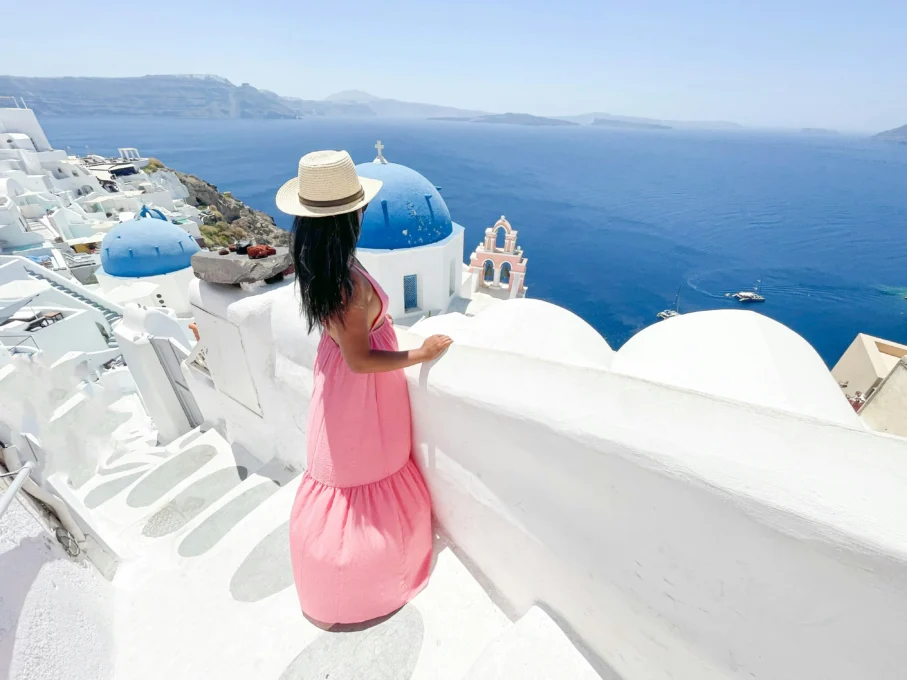
The salty aroma of the ocean blends gently with the scent of wild rosemary growing on the arid hills, while the golden late-afternoon light caresses the whitewashed facades, creating a poetic contrast with the indigo-blue domes that watch over the sea. The distant sound of waves gently breaking against the rocks of a hidden cove merges with the soft echo of a sirtaki played on a guitar in a nearby tavern, inviting one to slow down their pace and simply contemplate. It is under this atmosphere of serenity suspended in time that Greece envelops its visitors, transforming every moment into a living, pulsing memory that transcends history itself.
The warm breeze of late summer carries the murmur of quiet conversations in village squares where time seems to have decided not to pass. To walk through these lands is to float between the tangible and the mythological, where every piece of ancient marble holds the secret of gods and philosophers, and every sunset feels like an ephemeral painting drawn especially for those observing it. The promise of this destination lies not only in the dramatic beauty of its islands or the grandeur of its temples, but in the profound connection to a sense of freedom and absolute contentment that the locals call kefi.
Why Greece Enchants Travelers from All Over the World
Understanding the magnetism that emanates from Greece requires looking beyond the postcards. This corner of the Mediterranean is the spiritual cradle of the West, the sacred soil where the concepts of democracy, philosophy, and theatrical tragedy were born. Traveling through its regions means crossing the frontiers of time, where the remnants of past empires—from the classical splendor of Athens to Byzantine mysticism and Venetian fortifications—coexist in perfect harmony with contemporary life. The Greek identity is shaped by this historical resilience and a deep pride in its roots, visible in the respect for traditions that remain intact generation after generation.
However, the country’s true enchantment lies in its emotional geography. There is a singular rhythm of life, deeply connected to the cycles of the sun and the sea. In squares shaded by leafy trees, elders share stories while savoring a dense coffee, demonstrating that the true local wealth lies in the art of hospitality, the sacred concept of philoxenia—the love of the stranger. It is this unique combination of historical monumentality with the welcoming simplicity of daily life that transforms a stay into an experience of belonging, captivating travelers from all parts of the globe.
Climate and the Best Time to Visit Greece
The Greek territory enjoys a classic Mediterranean climate, characterized by sunny, dry summers and mild winters, though the experience changes drastically throughout the seasons. Spring, which stretches from April to June, is indisputably one of the most spectacular periods to explore the country. The hills and archaeological sites are carpeted with multicolored wildflowers, the air is crisp, and temperatures hover around a pleasant 25°C. It is the ideal time for cultural hikes and for experiencing Orthodox Easter, the most important celebration in local culture, filled with candlelit processions and communal feasts.
As the months of July and August approach, summer reaches its peak. The sun shines intensely, and the thermometer frequently surpasses 35°C, drawing crowds to the glittering beaches and celebrating the vibrant nightlife of the islands. For those seeking a more intimate atmosphere and seas perfectly warmed by months of sunshine, the beginning of autumn, between September and October, emerges as the second golden window. Temperatures become milder, the massive tourist flows subside, and the olive and grape harvests bring a rustic, festive charm to the country’s interior.
Discovering the Soul of Greece: Monuments, Landscapes, and Living Culture
To absorb the deep essence of this destination, one must navigate through different geographical backdrops, each holding a distinct facet of the national soul.
Athens and the Classical Cradle
The journey inevitably begins in the capital, a vibrant metropolis where the monumental past watches over the pulse of urban modernity. Rising majestically above the city, the Acropolis of Athens stands as a marble beacon evoking the golden age of Pericles. Walking up the sacred path to the Parthenon is to feel the weight of history under your feet. Just below, the historic neighborhood of Plaka enchants with its labyrinthine alleys, neoclassical mansions, and the scent of jasmine, while the modern Acropolis Museum houses archaeological treasures beneath a glass floor that reveals the ruins of the ancient city.
The Photogenic Romance of the Cyclades
No archipelago captures the world’s romantic imagination as intensely as the Cyclades. In Santorini, dark volcanic cliffs contrast with the immaculate whitewashed buildings that seem to balance on the edge of the precipice. Watching the sunset in the village of Oia, when the sun plunges into the flooded caldera, is an almost theatrical spectacle that draws eyes from all over the world. Meanwhile, in Mykonos, beyond the crystal-clear beaches, the charm lies in losing oneself in the maze of whitewashed alleys of Chora, with its colorful windows and the iconic Mykonos Windmills bearing witness to the strength of the Aegean winds.
Crete and the Mysteries of the South
As the largest of the Greek islands, Crete is a miniature continent with a unique and proud cultural identity. Here flourished the Minoan Civilization, whose secrets and legends of the Minotaur still echo in the ruins of the Palace of Knossos. The island is a paradise of dramatic landscapes, from imposing stone gorges to wildly beautiful beaches, like the famous Balos lagoon. In the port cities of Chania and Rethymno, the architecture reveals a fascinating fusion of Venetian and Ottoman pasts, visible in ancient lighthouses and covered markets overflowing with authentic Cretan life.
Flavors of Greece: Gastronomy, Traditions, and Local Experiences
The Greek table is a celebration of the land, the sea, and social gatherings. More than just nourishment, the act of eating is a ritual of sharing that stretches for hours under the shade of a grapevine. The local cuisine is based on the purity and exceptional quality of its seasonal ingredients: extra virgin olive oil, considered the region’s liquid gold; wood-barrel-cured feta cheese; ripe tomatoes bursting with sweetness; and aromatic herbs like wild oregano.
Meals usually begin with a selection of small, shared portions, the traditional mezedes, perfect for whetting the appetite alongside a glass of ouzo, the aromatic anise-flavored spirit. Savoring grilled fish and squid just hours after being caught, dressed simply with lemon and olive oil in a seaside tavern, redefines the concept of sophisticated simplicity. During local festivals and village celebrations, performances of traditional dances like the hasapiko come to life, uniting locals and travelers in circular choreographies that express the pure joy of living.
Where to Stay in Greece
The choice of accommodation shapes the style of your journey, offering experiences that range from cosmopolitan bustle to paradisiacal isolation.
Syntagma and Koukaki in Athens
For those wishing to thoroughly explore the historic and cultural wealth of the capital, staying near Syntagma Square offers convenience and elegance, being just steps away from the Parliament and major transport links. On the other hand, the Koukaki neighborhood attracts travelers with a more contemporary and independent profile. With its trendy coffee shops, small art galleries, and charming residential atmosphere, the area provides an authentic experience of Athenian daily life while keeping rates moderate and offering excellent walking proximity to the southern slopes of the sacred hill.
Oia and Imerovigli in Santorini
For couples and travelers seeking the iconic, romantic Aegean experience, the villages perched over the volcanic caldera are incomparable. Staying in Oia guarantees immediate access to the most famous sunset views and luxury boutique hotels carved into the cliffs, though at substantially higher prices. As a refined and more peaceful alternative, Imerovigli occupies the highest point of the cliff, offering one of the island’s most dramatic and exclusive panoramas, ideal for those prioritizing privacy and absolute silence.
The Old Town of Chania in Crete
For explorers who value history, stunning beaches, and cultural immersion, the Venetian harbor of Chania is a magnificent base. Staying in the restored historic mansions of the old town allows you to wake up surrounded by pastel-toned facades and pedestrian-only stone alleys. It is the perfect location for couples and families who enjoy evening walks followed by romantic dinners by the waterfront, while also serving as an ideal starting point to explore the wild west of the island.
Arriving and Exploring Greece
The journey toward Hellenic territory begins the moment the aircraft starts its descent over the deep blue sea dotted with endless spots of dry land. Most international travelers touch down via the ultra-modern Athens International Airport, a structure that welcomes the world with the radiant light of the Mediterranean. The route from the terminal to the heart of the city works as a poetic transition: arid hills of olive trees gradually give way to avenues lined with orange trees, revealing the first silhouettes of ancient marble framing the urban landscape.
Moving between the islands and the mainland transforms transportation into one of the most memorable parts of the trip itself. Departing from the bustling Port of Piraeus aboard a massive ferryboat is a classic ritual. Watching the outline of the Attica peninsula fade away as the vessel cuts through the calm waters of the Aegean evokes the spirit of ancient navigators. For internal routes on the islands or within the mountainous interior of the Peloponnese, scenic roads reveal dramatic curves bordering cliffs where small fishing boats dot the horizon, and slow hikes along shepherd trails lead to secret beaches inaccessible by vehicles, turning the act of moving into pure visual poetry.
Essential Information for Planning Your Trip
Designing a perfect stay in this destination requires tuning into a few practical details that ensure a comfortable journey without breaking the enchantment of the narrative. The official currency throughout the territory is the Euro. Although the payment infrastructure is modern and international cards are accepted in the vast majority of hotels, restaurants, and museums in major cities, carrying amounts in cash is still highly recommended for small daily expenses, such as coffees in remote villages, taxis, or buying handicrafts in local markets.
To absorb the atmosphere with the calmness the country demands, the ideal length of stay should never be less than 10 days, allowing you to divide your time evenly between the cultural effervescence of the capital and the slowed-down rhythm of at least two islands from different archipelagos. When packing, your choices should prioritize lightness and functionality. Clothes made from natural fabrics like linen and cotton are essential to mitigate the summer heat, accompanied indispensably by comfortable, high-grip footwear designed to tackle the polished stone slopes of island villages and the dirt paths of historical sites. Always pack a light jacket for breezy nights by the sea and scarves for visiting Byzantine monasteries. Connectivity is excellent, with wide mobile network coverage and high-speed internet easily accessible via eSIMs purchased even before arrival, ensuring that navigating maps and managing reservations goes smoothly.
Conclusion — The Memory That Remains
As the boats pull away from the pier and the island lights begin to twinkle timidly on the horizon, the traveler realizes that the true treasure discovered does not fit into photographs or suitcases. Greece operates a subtle transformation in the gaze of those who visit it. It remains in the memory through the warmth of marble stone heated by the sun, in the purity of a blue that seems to saturate the mind, and in the rediscovery that life’s deepest pleasures reside in the slowness of a late afternoon shared around a table. It is a destination you do not leave behind; it simply comes to dwell within you, whispering an eternal invitation to return.
FAQ: Frequently Asked Questions
What is the best way to move between the Greek islands? Travel between the islands is efficiently done through passenger ferries and high-speed catamarans. It is highly recommended to book tickets in advance during the peak summer months to secure the best seats and desired schedules.
Is it necessary to rent a car to explore the country? In large cities like Athens, public transport and walking perfectly cover all your needs. However, on larger islands like Crete and Rhodes, or to explore the mainland, renting a vehicle offers total freedom to reach hidden beaches and isolated traditional villages.
Are Greek beaches suitable for children? Yes, the country features a huge variety of beaches with calm, shallow waters and no waves, especially protected in bays on the islands of Naxos and Corfu, making them ideal and safe environments for family travel.
Is tap water drinkable on the islands? While water is perfectly safe for bathing and brushing teeth throughout the country, on most smaller islands, consuming bottled or filtered water is recommended due to the scarcity of natural freshwater sources and the high mineral content in local networks.
Are archaeological sites open every day? Most major monuments and museums operate daily, but visiting hours vary considerably between the peak summer season and the winter months. It is always wise to check official channels before your visit.